
The Girls are Alright
Directed by Itsaso Arana. 2023. Runtime 85 minutes.
The whole idea is spelled out in the clever opening credits: 5 chicas, seven dias, one casa.
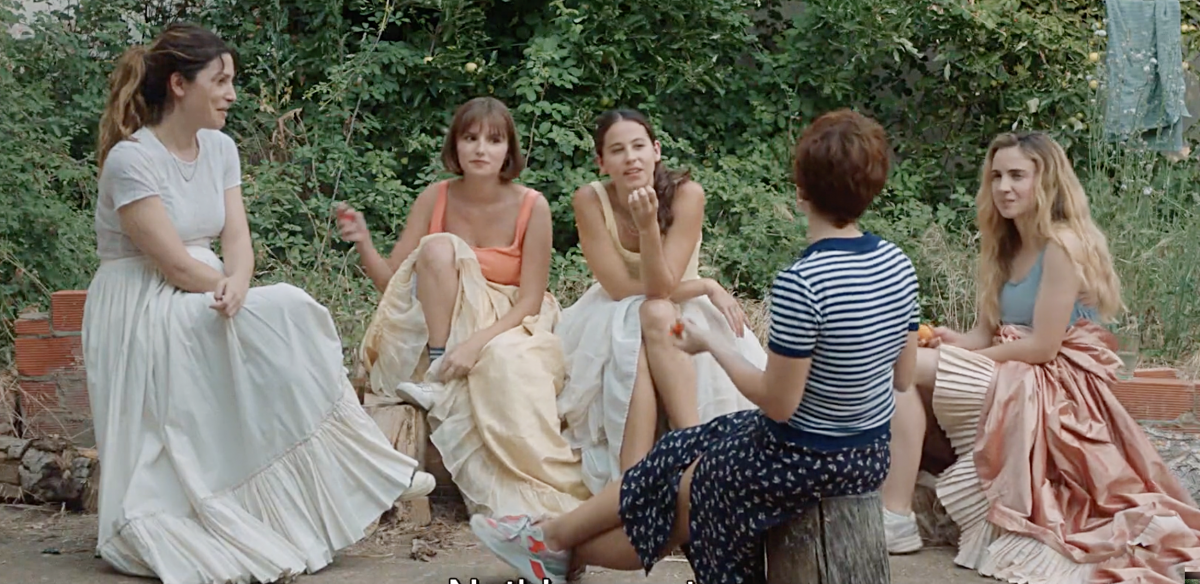
Five actresses and one writer converge on a secluded country villa to work out a play they’ll perform. They bask in good food, smart conversation, and expressing themselves without reservation.
The film is the directorial debut of the popular Spanish actress Itsaso Arana (co-writer and star of The August Virgin) who plays a version of herself as a sort of mentor to the troupe: Barbara Lennie, the most mature and newly pregnant; Irene Escolar, experiencing love she hopes will be requited; sexually assured Helena Ezquerro; and young, impetuous Itziar Manero. They laugh, dream, philosophize, and rehearse on a portable stage in a barn.
That’s pretty much it. The plot contains no discernible conflict (unlike, say, Women Talking, in which the congregation has an agenda). The film is aware of this: “Shit, not even a little romanticism,” one character complains. A man (Gonzalo Herrero) eventually enters, but he’s window-dressing, an accessory. This is an ode to feminine intimacy, and as such is not a bad way to spend two hours. The action is accompanied by a quaint harpsichord.
The film turns meta on us in its late stage, with the actors talking about appearing in the very film we’re watching. “Films are letters to the future,” one says. The plot is so thin, however, that it seems less like a narrative flair and more like a justification for its existence.
The title’s coy as well. The “girls” of The Girls are Alright are uniformly intelligent, erudite, attractive, and white. As far as stressors go, they have few. The Girls are Alright? Of course they are. We didn’t doubt it for a minute.
Tiny Lights
Directed by Beata Parkanová. 2024. Runtime 74 minutes.
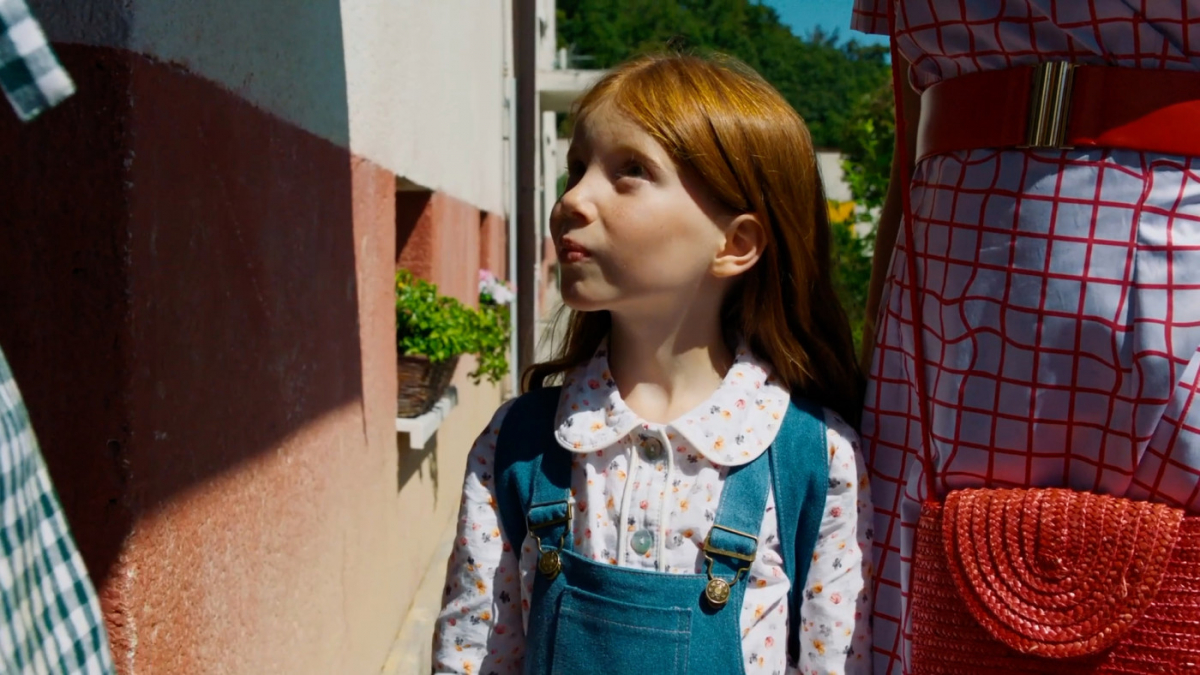
I find myself haunted by the film Tiny Lights, which is surprising since it’s the story of a six-year-old girl on a beautiful spring day. It’s odd to use “haunted” in this context, but I think about it often, mostly because its point of view is unusual and so well realized.
It follows Amálka as she frolics, mimics, misbehaves, and generally enjoys being a youngster. It really follows her, in startling first-person, her lovely face filling the screen. Adults appear, as well, but they are peripheral, solely on the edges of the frame and engaged in an argument of which Amálka is unaware. Director Beata Parkanová’s point artfully preserves the sanctity of a young child, her sense of awe and fun, even as events that will affect her play out around her.
Ms. Parkanová is lucky to have the involvement of Mia Bankó as her subject. What a remarkable young actress. Ms. Parkanová says in the production notes that Amálka is her surrogate, and she worked with Mia for a year before filming, and before the girl could age out. As a result, Mia delivers a guileless and absolutely believable performance. She appears totally unaware of the camera and is tuned in only to the juvenile bliss of her daily life.
Praise goes to the other actors, Elizaveta Maximová (mother), Veronika Zilková (grandmother), Martin Finger (grandfather), and Marek Geisberg (father). The visuals sing thanks to Tomas Juríček’s cinematography, Alois Fišárek’s editing, and Petr Bakoš’s production design.