Factory Girl
(Weinstein Company DVD)
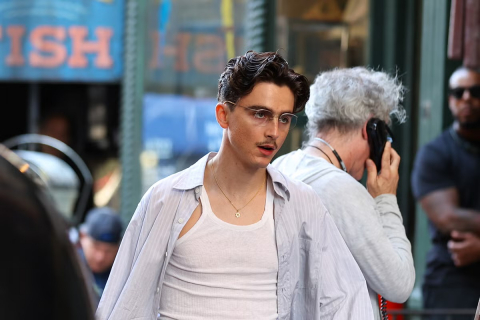
The court of the silver-haired pied piper of the Factory has proved a substantial source of inspiration for movie-makers, through which Andy Warhol and his dubious darlings are reaping far more than his promised fifteen minutes of fame. Valerie Solanas and her SCUM gun, Basquiat and his designer dreads, Capote and his mewling mannerisms, and the long-promised story of the divinely beautiful Candy Darling are perfect examples of the lingering allure of trash and tragedy. It is no surprise that the latest trawl through the silver memories of the largely departed Warhol cavalcade is Factory Girl.
"The Hollywood war movies were propaganda for our side, and put us in the comfortable position of identifying with the heroic anti-Nazis," New Yorker critic Pauline Kael noted when reviewing The Sorrow and the Pity.
But if every film has a paladin of sorts, with whom can we connect in Earl Morris's latest documentary, Standard Operating Procedure, an unrelenting scrutinization of the Abu Ghraib horrors?
They're a calling card, a vanity project, a graduate thesis, and a way to burn through the money of friends and family (not to mention your credit cards). And sometimes, they're great art. They're short films, and when they're done right, just like short stories, they are a breed apart. I've always mourned the fact that movies aren't preceded by short subjects any more. In our increasingly attention-span-challenged world, shorts would seem to be a great fit. And who needs to see 25 minutes of coming attractions?
How much politically incorrect, defecation-filled, blood-laced, bare-bosomed, anus-violating imbecility can one movie musical contain? Director Lloyd Kaufman, the director of Poultrygeist: Night of the Chicken Dead and the man behind Troma Entertainment, has proven there are clearly no limits.
Certainly, this will be no surprise to any of the fans of Mr. Kaufman and his Troma ventures. The creative force behind such cult classics as The Toxic Avenger series, Class of Nuke 'Em High, and Sgt. Kabukiman, NYPD has clearly proven over the years that he can take on any liberal concern (e.g. nuclear waste) and KABOWEE!
Razor Blade Smile (Manga Video)
“I bet you think you know all about vampires. Believe me you know fuck all!” purrs the divinely named Lilith Silver in perversely sophisticated English tones at the start of this wonderfully funny, outrageously stagy, British horror flick. Brilliantly portrayed by Eileen Daly, like Diamanda Galas possessed by the mischievous spirit of Fenella Fielding, she vamps and camps her character's bloody way through this low-budget masterpiece, sweeping along like Marilyn Manson in shades auditioning for the lead in The Matrix.
The Museum of Modern Art is home to two theaters programmed by some of the finest curators in the business. And if you ever get to chat them up at a cocktail party or at a MENSA meeting, you'll find them as charming as they are erudite, especially the celebrated Laurence Kardish, Senior Curator, Department of Film.
This, by the way, is the perfect time to kvell over Mr. Kardish, who organized, in cooperation with Telefilm Canada, last week's celebration of the celluloid side of our northern neighbor, Canadian Front, 2008. Eight feature films were screened spotlighting the best and more innovative talent of that rather huge country.
I, like many of my peers, have a profound fondness for Dr. Seuss. His classic books taught us, and most of our children, not only how to read, but how to rhyme and dream in color. So I was more than skeptical about how Hollywood could expand, yet again -- think of the marginalized live action flicks The Grinch and The Cat in The Hat -- a sliver of a book into 90 minutes of family entertainment. I'm happy to report that Horton Hears A Who! is a joyous romp of a movie, one that the good Doctor would probably even approve. Using all of the computer-heavy advantages of the unlimited animation budget at 20th Century Fox, the folks who brought us the Ice Age franchise now present us with a world most Baby Boomers and Xers know very well.
One of the true highlights of the annual film calendar is the Rendez-Vous with French Cinema held at Lincoln Center in conjunction with the French Film Office/uniFrance USA. Each year Rendez-Vous spotlights some of the more challenging, beguiling, innovative, and/or gloriously oh-so-French offerings from across the sea. And along with the films come the directors and stars.
So between March 10 and 19, if you're by West 66th Street, get ready to run into Elsa Zylberstein, Claude Miller, Cédric Klapisch, Claude Lelouch, Sandrine Bonnaire, and a dozen more of French cinema's most dynamic talents.
"Despite what the Wall Street Journal says, our awards are the best-kept secret in America, with the possible exception of what George W. Bush did in the '70s." -- Billy Crystal
February 24 is just around the corner. Yes, Oscar night, but does anyone really care?
Not playwright Larry Kramer, who noted in a rather friendly manner, "I don't want to be part of this article."
A few years back, Forbes.com noted with tongue only slightly in cheek that "[o]ne might not think of death as an optimal career move, but for some celebrities, crossing over to the far side doesn't hurt their income in the least."
For example, last year, the estate of George Harrison earned $22 million, while Charles M. Schulz's scored $35 million. As for Yoko's John, he raked in $44 million; however, Elvis was the top Hound Dog among deceased earners with $49 million.
Tehilim, French-born Raphael Nadjari's fifth film, might just be the best unreleased celluloid treat of the year. However, thanks to local celebrations of cinema such as the 17th Annual New York Jewish Film Festival (NYJFF), several hundred cineastes here and there will be discovering this astonishing work by an overlooked master. Well, not totally overlooked: Nadjari was nominated for a Golden Palm at Cannes last year.
I know they've got a lot of good lawyers out in Hollywood. I'm not so sure about writers and filmmakers. But it would be my suggestion for Wes Anderson to get himself one of those sharks and take out a suit against the makers of Juno. The people who made Garden State, and Sideways, and Little Miss Sunshine might want to join in, in a kind of quirk-infringement class action suit.
Except that they're all too nice to do it.
And, from what I can tell, the mainstream cinematic press certainly won't act to stamp out the odious brand of sweetness being peddled in Juno. So it's up to me.
Learning Hebrew. Fighting a disastrous war in Lebanon. Pogroms in Argentina. A singing mohel. Yes, it's time again for the annual New York Jewish Film Festival (January 9-24). In fact, this is the 17th year The Jewish Museum and the Film Society of Lincoln Center have pulled together the best of the best of current cinema that explores Judaism in all its complex variations.
One of the fest's more entertaining and informative efforts is Oded Lotan's debut effort, The Quest for the Missing Piece.
The Great Debaters has so much heart and soul that it will resonate with viewers long after the final credits have faded. Moreover, it exposes social injustices that still dog some corners of our globe, and while doing so manages to sidestep sticky sentimentality. At the center of this film inspired by true events is the black poet and professor Melvin B. Tolson (Denzel Washington), who coached the debating team from Wiley College (Marshall, TX) to a national championship in 1935.
One can't say for sure whether Simone de Beauvoir was envisioning the likes of Gregg Araki's Smiley Face when she penned The Second Sex (1949), but in some odd, dyspeptic way, a feminist timeline could be envisioned that places the former at point A, and the latter at point Z.
Yes, finally, a half-century later, a tedious, empty-headed stoner film focusing on a female pothead, Jane F. (Anna Faris), who's limited to one facial expression and lines such as "I'm totally vibing on you, dude," has arrived just in time to greet the New Year. Santa must have thought we were very, very bad.
A most unlikely story, Lars and the Real Girl is a film about a socially awkward young man, Lars (Ryan Gosling) who purchases a blow-up sex doll named Bianca and becomes attached to it as though it were a real person. Lars finds his true love on a computer website brought to his attention by a co-worker at the office.
That in itself might not be such a huge deal – there is a market for blow-up dolls for a reason, and more than a few buyers at any given time.
The loss of innocence in No Country for Old Men is so profound that you wish you could make off to a new land and start fresh. Ethan and Joel Coen examine America’s moral landscape with a dusty prairie’s long lens, riveting deathly silent close-ups, and master directing and editing (using their moniker Roderick Jaynes). It’s right vs. wrong, law vs. order, man vs. himself, illegal drugs, illegal aliens, illegal firearms; issues that still register from sea to shining sea, regardless that the movie is set in Texas in 1980. We’ve seen it before in such classics as In Cold Blood, Terrance Mallick’s Badlands, and Oliver Stone’s Natural Born Killers.
Paul Haggis is a serious writer and director. He’s into issues. In his Academy Award winning Crash, he took an insightful look at racism in contemporary Los Angeles. In his script for Letters from Iwo Jima, Haggis brought a unique humanity to the doomed Japanese army officers stranded on a Pacific Island in World War II. Now in his latest film, In the Valley of Elah, Haggis lays out a story of young soldiers recently back from a tour of Iraq. They seem to be doing more or less okay, but as the film progresses, we see just how deeply they have been damaged.
Even though all the reviewers have likened Exiled to a Spaghetti Western, it features no horses or guns or vast Spanish landscapes, but it does have plenty of squinting and scowling and good-bad guys and bad-bad guys. Call it a modern multi-genre mashup.
The movie takes place in Macao just days before the transition from Portuguese to Mainland Chinese rule in 1998. On a summery, still, narrow street, something like a tiny neighborhood square in Mexico or Sicily, with little traffic, four gangsters gather. Two are there to kill, the other two to protect, their friend Mr. Wo (Nick Cheung).
Welcome to the perfect movie. Cristian Mungiu's 4 Months, 3 Weeks and 2 Days is the accomplished melding of both an aesthetic and a moral sensibility, of politics and art, of love and disillusionment, of acting and being.
The winner of the Palme d'Or at Cannes and showcased at the recent New York Film Festival, this faultlessly shot and edited offering has already won over the world's critics.
Tyler Perry started out writing about his abuse as a child, so he’s had a serious side from the start. It just got overlooked in the wake of a series of comic movies he wrote (and often directed and produced as well) and starred in the cross-dressed role of Mabel “Madea” Simmons, the matriarch of an African-American family. His Madea movies have been wildly popular, despite a lack of attention or respect from most of the critical establishment.
His newest film, Why Did I Get Married? (Lionsgate, PG-13), which was the #1 release in its opening week, again finds him writing, directing, producing, and starring. This time, though, not only does Perry play a male role, he has a somewhat more serious tone, while still providing laughs.
CONTROL by Anton Corbijn
A talk with Peter Hook, Mark Greenhalgh and John Robb at the Cornerhouse, Manchester on Friday, October 19, followed by a screening of the Ian Curtis biopic.
It could have been three guys locked in music-related conversation in the Gay Traitor, the Hacienda's basement bar named after the spy Anthony Blunt (now seriously expensive apartments). It was, however, the tiny stage of Screen Two of Manchester's premiere arts cinema, the Cornerhouse, and these three had an audience.
Samuel Fuller came out of WWII guns a-blazin’, anxious to get back into the movie game in a big way. Fuller had done some scripting before the war, had made connections, but the tabloid jockey-turned-infantryman had yet to hit personal paydirt.
B-movie producer Robert Lippert, responsible for dozens of B pictures, could greenlight anything that looked interesting and would cost peanuts to shoot, and when Fuller said he wanted to make a picture about Jesse James’s killer, Robert Ford, Lippert gave him the go-ahead.
Thanks to the Ethical Consumer and its list of boycotts, those of us who haven't turned our backs on any product in decades--possibly since Caesar Chavez's grapes and Coors beer--can now once again jump into the thick of things.
First, stop sipping that Coca-Cola because of "its repression of trade union activity in Colombia and its depletion of groundwater resources in India."
Social justice has been served up. Yes, just as the Supreme Court has begun to curtail the rights of American women to control their bodies, Knocked Up, the first great anti-abortion comedy, impregnated both our theaters and our minds June 1, and it still refuses to miscarry. This past weekend (July 29), it still raked in over a $1 million for a U.S. total so far of over $145 million. Yes, Jude Apatow's latest cash cow refuses to be knocked down. If that wasn't enough, it's received a 91% approval rating from the nation's critics according to Rotten Tomatoes.
After surviving the initial stampede into the movie theater, with people climbing on top of each other to get to the “good seats” first, I was left wondering why I actually came to see The Simpsons Movie. I never was a huge fan of the television show, but I always enjoyed its irreverent, witty humor. I guess that I was curious to see what Matt Groening and his team could deliver for their long-awaited transition to the big screen. I have to admit that I was also sucked in by the movie’s marketing campaign, when 7-Eleven stores were converted to Kwik-E-Marts carrying Springfield’s finest: bright pink donuts, Krusty O’s Cereal, Buzz cola, and frozen Slurpees!
Harvey Birdman, Attorney at Law, Vol. 3
Birdman and the Galaxy Trio: The Complete Series
(Turner Home Entertainment)
When F. Scott Fitzgerald wrote, “there are no second acts in American lives,” he obviously hadn't watched Adult Swim. The grown-up section of Cartoon Network's otherwise childish line-up has often given new leases on life to such career-dead characters as Space Ghost, who went from intergalactic superhero (Space Ghost and Dino Boy) to punch-drunk talk show host (Space Ghost: Coast to Coast). Clearly, Adult Swim has shown that there are second acts in American lives…if you draw them.
"Fair is foul, and foul is fair," note the three witches in Macbeth's opening act, and that is a justifiable critique of director Geoffrey's Wright's audacious adaptation of the ultimate tale of untethered ambition gone awry.
It's now set in Melbourne, where Aussie drug-dealing crime boss Duncan (Gary Sweet) is about to fatally discover that his brutal, yet true-hearted, henchman Macbeth (Sam Worthington) is switching his loyalties to more selfish aims.
Spurred on by pronouncements from a trio of nymphet soothsayers traipsing through a graveyard, and later on by his calculating spouse (Victoria Hill), Macbeth decides that he wants to be the head hoodlum of Down Under, and he'll do whatever it takes to achieve that goal.

First, let's get through the superlatives. SiCKO is one of the most important films you'll ever see in your lifetime, which might be rather short depending upon your HMO. It's additionally one of the most entertaining, illuminating, contumelious, and brave documentaries unspooled on American screens to this date.
Yes, the director is Michael Moore, the Steven Spielberg of reality cinema. But whether or not you adored his Fahrenheit 9/11 (2004), his valentine to Bush's ineptness; or Bowling for Columbine, in which he used Charlton Heston for target practice; or Roger & Me (1989), a letter bomb to uncaring corporate America, you'll adore these 123 minutes that he has now wrought.
Peter Greenaway once noted, "We somehow expect cinema to provide us with meaning, to console us. But that's not the purpose of art." If that's so, the annual Human Rights Watch International Film Festival (HRW) is possibly the most artful gathering of new cinema in the world.
For 18 years now, HRW's curators have gleaned the most informative, accomplished, disconcerting, and challenging narrative features and documentaries from disparate centers of chaos. Their goals are to spotlight the often-overlooked inconsistencies in modern life, the miscarriages of justice, and the invincible heroes who surmount the most titanic devastations. Consoling is not a top priority here.