
Lynn Chadwick: Hypercycle - Chapter II: Archetype (1963-1977)
Perrotin Gallery, NYC
Til Dec 20th
Herbert Read used the term "Geometry of Fear" in his introductory essay for the show he had curated as part of the British entry for the Venice Biennale of 1952, "New Aspects of British Sculpture."
Lynn Chadwick's pieces from that show, Beast, Bullfrog, and Maquette for an Unknown Prisoner, were in keeping with his theme of sculpture that emanated the collective anxiety of the post-war period.
He would later distance himself from the appellation, believing that his work did not have much to do with the war. I think he was more concerned with alluding to the engineering and architecture of rebuilding, while also evoking the landscape the British soldiers had been fighting for.
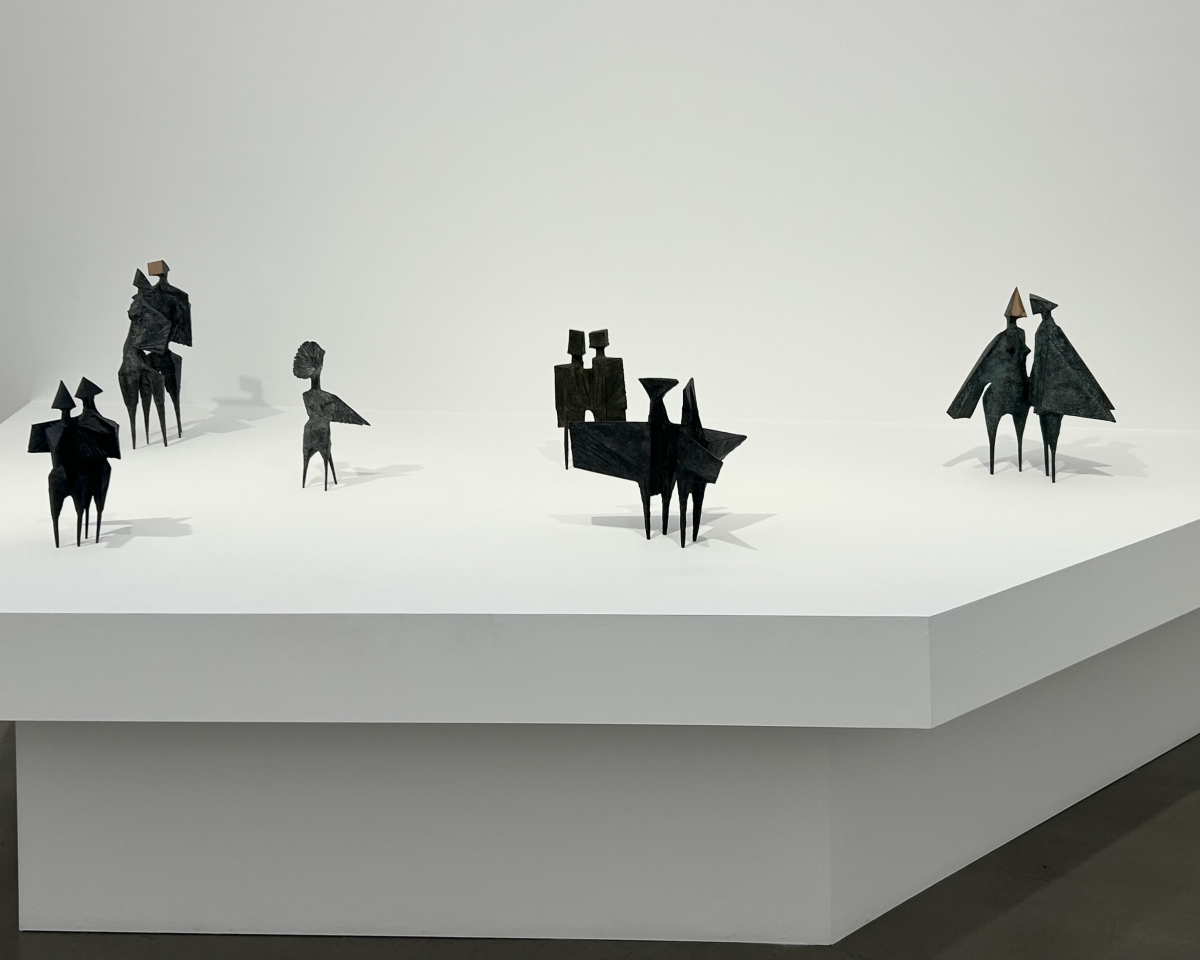
The small figures in the Perrotin show appear with their gowns caught in the breeze, advancing on tiny tarsi, ready to fly. This entomological association contrasts with the more industrial structures that appear to be just beneath the surface in other pieces.
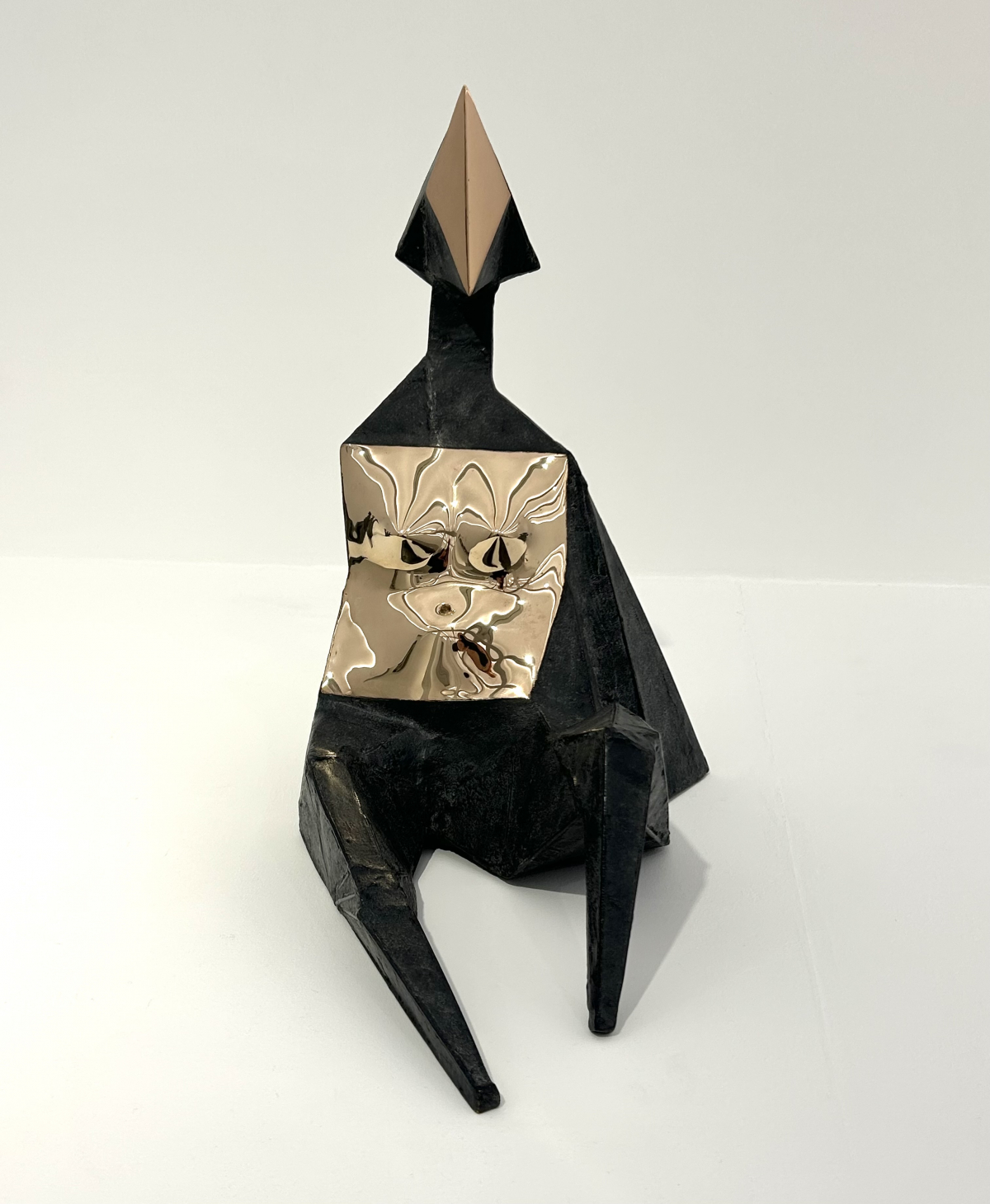
"Sitting Elektra II" (1968) is an elegant female figure that resembles a resting dancer, with a bright triangular face and a bob haircut. Her small breasts and a possibly newly fertilized belly are represented on a highly polished square breastplate that contrasts with the rest of the grey figure. The posture with its broad shoulders and erect head has the quality of theatrical catalepsy. Like a figure chosen from the audience for a hypnosis act.
"Monitor" from 1965 is a tall piece that appears to have a soft, tentlike body with a batwing motif on the surface that suggests the nature of its understructure. It has a more manufactured "head" composed of two thinly separated, lens-like structures. These two flat rings look manufactured, almost as if they were found objects. The name helps redirect the gaze back to the viewer. It could be a tower in Foucault's Panopticon system of surveillance.
The dusty, tan-coloured surface re-humanizes the object, making it more tactile.
Chadwick's pieces have a fascinating surface created by different firing techniques, ranging from an almost matte ceramic feel to the ashier, lead-like surfaces of the figures.
"I actually wanted to produce a sort of touchable object, a tangible object. I really wanted to do that rather than be involved with intangible things like architecture." - Lynn Chadwick
He began his sculptures with a steel skeleton, often adding clay to the interior so that the structure showed through. He would cover the armature, wholly or partly, with a composite of plaster and iron filings, working it with his hands or tools to generate a gesture-scaled surface. This was the master model for lost wax bronze casting. There were a lot of finished experiments made in the Lyppiat studio forge to create the texture and colour of the final piece.
We would all like a little more geometry with our fear. Ours seems to come from all directions with no visible structure behind it. Lynn Chadwick does not make ironic statements through highly polished surfaces, as many of our contemporary sculptors do. His work is intratextual, relating to other elements in this dimension that he has created rather than quoting from other artists. It is a singularly personal work that relies on imagination and observation.